Vietnam News


CPI in January up 0.05%
The Consumer Price Index (CPI) of Vietnam in January 2026 increased by 0.05% compared to the previous month, the National Statistics Office (NSO) announced on January 6.
The growth was mainly driven by stronger consumption demand during the Lunar New Year (Tet) holiday. Higher pork prices due to increased Tet demand, rising prices of dining-out services, and higher costs of housing maintenance materials linked to year-end home renovations were the main contributors to the increase, according to the NSO.
Of the 11 major commodity and service groups, nine recorded price hikes while two saw declines. Notably, the housing, electricity, water, fuel and construction materials group rose 0.7%. The beverages and tobacco group increased 0.58% as demand for consumption and gift-giving during Tet pushed up beer and alcohol prices by 0.45%, cigarettes by 0.6%, and non-alcoholic beverages by 0.89%.
The NSO also reported that core inflation in January increased 0.35% from the previous month and 3.19% year on year, higher than CPI growth, as food and energy prices were excluded from its calculation.
VnEconomy-Song Hà
Vietnam’s seafood exports increase 13% in January
Vietnam’s seafood export revenue was estimated at $874 million in January, up 13% year-on-year, according to the Vietnam Association of Seafood Exporters and Producers (VASEP).
Shrimp remained the country’s top seafood export, generating $331 million, an increase of 6.4% from a year earlier and accounting for nearly 38% of total export value.
Growth in the first month of the year was driven mainly by Asian markets, particularly China, Japan and ASEAN, as well as strong performance in key product groups such as pangasius, squid and octopus.
China continued to be Vietnam’s largest seafood market, with export turnover reaching nearly $250 million, up 28.7% compared to the same period last year.
Exports to other major markets also expanded. Shipments to Japan rose 21.3% year-on-year to almost $146 million, exports to ASEAN surged 32.2% to around $69 million, and those to the Republic of Korea increased 9.1% to more than $67 million.
VnEconomy-Chu Khôi
New biotech statistical framework to be established by 2028
Deputy Prime Minister Nguyen Chi Dung has signed Prime Ministerial Decision No. 208/QD-TTg, approving a scheme for the statistical assessment of biotechnology’s contribution to socio-economic development (hereafter referred to as the Scheme).
The Scheme aims to develop a set of indicators and statistical methodologies for biotechnology, organize data collection, and operate a stable statistical system. This framework will ensure that the proportional contribution of biotechnology to socio-economic development is identified and monitored periodically, providing a basis for evaluating development goals and the application of biotechnology.
According to the roadmap, in 2026, the focus will be placed on researching international methodologies and experiences regarding the statistical assessment of biotechnology's contribution. This phase includes creating a directory of economic activities that reflect the scope and scale of biotechnology applications.
In 2027, authorities will develop specific indicators and survey plans, conduct pilot surveys, and collect data on biotechnology's contribution across several economic sectors. These efforts will serve as the basis for standardizing the final indicator set and survey methods.
By 2028, the official set of indicators and statistical methodologies for measuring biotechnology’s contribution to socio-economic development will be formally issued. From 2029 onwards, periodic nationwide surveys will be conducted to collect data and measure the sector’s impact.
From 2030, the system of biotechnology statistical indicators will continue to be refined to ensure the consistent monitoring of the sector's contribution across all fields of the economy. This data will serve as a foundation for evaluation and policy direction to achieve the biotechnology development and application goals for 2045, as set out in the Politburo’s Resolution No. 36-NQ/TW.
To achieve these objectives, the Scheme outlines eight key tasks and solutions, including the intensive research of methodologies and international best practices for assessing the socio-economic impact of biotechnology.
Vneconomy-Hằng Anh
Over $6.1 bln to be mobilized for an aviation finance hub in Ho Chi Minh City
The newly-established Asia-Pacific Aviation Finance Hub (AAFH), based in Ho Chi Minh City, is expected to attract over $6.1 billion in initial transactions, creating a platform to connect international capital flows with the aviation industry in Vietnam and the broader region.
The Vietnam International Financial Center in HCM City (VIFC-HCM), in collaboration with Vietjet, announced the establishment of the AAFH, at the Singapore Airshow 2026 on February 4.
The event saw participation from leading global aircraft and engine manufacturers, including Airbus, Boeing, CFM International, Pratt Whitney, and Rolls-Royce, as well as the International Air Transport Association (IATA) and various international financial institutions.
The AAFH is being developed amid a global aviation restructuring, with the Asia-Pacific region projected to remain the primary driver of growth.
The hub is set to implement specialized financial mechanisms under the legal framework of Vietnam's international financial center. These include competitive tax and fee policies, flexible capital and foreign exchange mechanisms, multi-currency payments, and legal standards designed to protect property rights and attract international experts.
The hub's operational model aims to integrate financial services, airport infrastructure, free trade, maintenance, repair, and overhaul (MRO) services, training, and logistics to support the entire aviation value chain. According to the strategic plan, the transaction volume at the aviation finance hub could reach approximately $50 billion by 2035.
Speaking at the event, Mr. Truong Minh Huy Vu, Chairman of VIFC-HCM, stated that the launch of this regional aviation finance hub is a concrete step toward realizing the goal of a modern, open international financial platform capable of directly connecting capital flows to the real economy.
Domestic enterprises played a key role in the formation of the hub, with Vietjet serving as a founding member. With significant financial needs to support its fleet expansion, Vietnamese airlines are expected to contribute the initial transaction volume to kickstart the center's activities.
Ms. Nguyen Thi Phuong Thao, Chairwoman of the Board of Directors of Vietjet, noted that the hub marks a milestone in linking international capital with the development of the aviation industry and the regional economy. She emphasized the company's commitment to driving substantive financial transactions from the very beginning.
On the sidelines of the Singapore Airshow 2026, Vietjet signed engine and aircraft financing agreements totaling more than $6.1 billion. These include an agreement with Pratt Whitney for engine supply and maintenance services for 44 A321neo and A321XLR aircraft, as well as financing arrangements with several international organizations, including the Pacific Investment Management Company (PIMCO).
Vneconomy-Đan Tiên
Aviation sector increases flights and expands fleet to serve Tet demand
To meet the surge in travel demand during the Lunar New Year (Tet), the aviation industry has increased flight frequencies, added more aircraft to its fleet, and expanded airport capacity to ensure seamless transportation.
The Civil Aviation Authority of Vietnam (CAAV) stated that it has directed relevant units to closely monitor booking statuses, economy class airfares, and travel demand on domestic routes for the Lunar New Year holiday. Based on these observations, the CAAV will consider requesting airlines to add flights in accordance with their operational capacity.
The aviation sector has also facilitated the addition of 19 aircraft compared to the same period last year, bringing the total operating fleet during the Tet peak to approximately 216–218 planes.
Simultaneously, regulatory authorities have increased slot coordination parameters at Noi Bai and Tan Son Nhat international airports to 46–48 flights per hour. This move enables airlines to develop plans for additional flights, promote night operations, and expand the supply of tickets across various price points. Several airports with high demand—such as Tho Xuan, Dong Hoi, Chu Lai, Phu Cat, Pleiku, and Tuy Hoa—will implement 24/7 operational plans during the peak period.
The total number of passengers passing through airports during the Tet peak is estimated at 4.1 million, a 13% increase compared to last year. Specifically, Tan Son Nhat Airport is expected to serve approximately 1.48 million passengers (up 7.3%), while Noi Bai Airport is projected to handle about 1.08 million passengers (up 21%).
The CAAV is continuing to coordinate with airlines to adjust and supplement seat capacity on high-demand routes. These efforts aim to meet the public's travel needs while ensuring that aviation operations remain safe and efficient throughout the Tet peak and the spring festival season.
Vneconomy-Tuấn Dũng
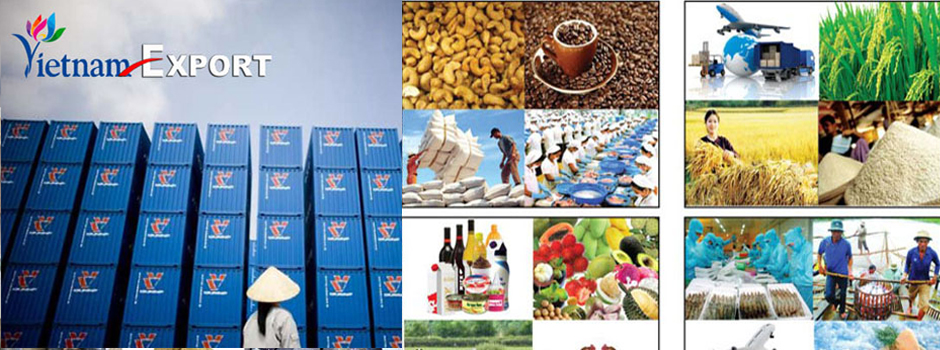
Vietnam's exports of agro-forestry-aquatic products earn $6.51 bln in January
Vietnam’s exports of agro-forestry-aquatic products in January earned nearly $6.51 billion, marking a year-on-year increase of 29.5%, according to the Ministry of Agriculture and Environment.
Of the total, agricultural products accounted for around $3.6 billion, up 41.8%; livestock products $47.5 million, surging 20.2%; seafood $940 million, rising 21.5%; and forestry products $1.72 billion, soaring 13%.
Key agricultural exports recorded strong growth in January, including coffee, rubber, tea, rice, fruits and vegetables, cashew nuts and pepper, with increases in both volume and value.
Asia remained the largest export market, absorbing 45.3% of Vietnam’s agro-forestry-fishery exports. It was followed by the Americas with 22.7% and Europe with 13.4%. Africa and Oceania accounted for more modest shares of 2.6% and 1.4%, respectively.
China, the US and Japan were Vietnam’s three largest export markets, with respective market shares of 22.6%, 20.4% and 7%. Exports to China surged 66.1% year-on-year, while shipments to the US and Japan increased by 21.6% and 19.6%, respectively.
VnEconomy-Chu Khôi
Government suspends Food Safety Decree until April 15
The Government has decided to temporarily suspend the implementation of Decree No. 46/2026/ND-CP until April 15, which details several provisions and enforcement measures under the Law on Food Safety.
The decision follows concerns that the decree’s enforcement could disrupt food imports, exports and domestic supply chains.
The suspension also covers Resolution No. 66.13/2026/NQ-CP of the Government on the announcement and registration of food products.
Both legal documents will take effect again from April 15.
During the suspension period, Decree No. 15/2018/NĐ-CP (dated February 2, 2018) and its guiding documents will remain in force, continuing to govern the implementation of food safety regulations.
The temporary halt is intended to give ministries, sectors and local authorities more time to prepare for the rollout of Decree 46, while ensuring smooth production and business operations.
The Government has assigned the Ministry of Health, Ministry of Agriculture and Environment, Ministry of Industry and Trade, and Ministry of Finance, along with other relevant agencies and localities, to coordinate preparations to ensure the effective enforcement of Decree 46 and Resolution 66.13 once they come back into force.
VnEconomy-Nguyệt Hà
Party General Secretary To Lam’s state visit to Laos successfully concluded
Party General Secretary To Lam and a high-ranking Vietnamese delegation on February 5 concluded a successful state visit to Laos at the invitation of General Secretary of the Central Committee of the Lao People’s Revolutionary Party and President Thongloun Sisoulith, according to a report from the Vietnam News Agency.
Prime Minister Pham Minh Chinh and National Assembly Chairman Tran Thanh Man joined the high-ranking delegation.
During the visit, General Secretary Lam held talks with General Secretary and President Thongloun Sisoulith; met with Prime Minister Sonexay Siphandone and National Assembly President Saysomphone Phomvihane; and received President of the Lao Front for National Construction Kikeo Khaykhamphithoune.
He witnessed the signing and exchange of cooperation documents; briefed the Lao side on the results of the 14th National Congress of the Communist Party of Vietnam; and visited the Vietnamese Embassy in Laos and met with the Vietnamese community there.
He also laid a wreath at the Monument to the Unknown Soldiers; attended a traditional wrist-tying ceremony; and participated in a state banquet hosted by the Lao Party General Secretary and President.
On this occasion, Prime Minister Pham Minh Chinh met with Lao Prime Minister Sonexay Siphandone, while National Assembly Chairman Tran Thanh Man met with his Lao counterpart Saysomphone Phomvihane. Leaders of several ministries and agencies of the two countries also held meetings to exchange information and strengthen bilateral cooperation.
At the meetings, both sides expressed their satisfaction with the deep, effective, and substantive progress achieved in Vietnam–Laos cooperation in recent years, emphasizing that these outcomes have not only directly contributed to each country’s development but have also made positive contributions to peace, stability, and development in the region.
The two sides agreed that alongside the positive results achieved so far, and based on existing agreements and cooperation mechanisms, they will continue to renew cooperation modalities and improve quality and effectiveness in a more substantive manner; closely link strategic vision with concrete actions; and further strengthen strategic coordination between the two Parties and the two States.
Based on major long-term strategic orientations, the two sides will continue to enhance information exchange and share experience in implementing the resolutions of each Party’s congress. At the same time, they will strengthen economic connectivity, priorities resources, closely coordinate, and resolutely implement strategic projects to create new momentum for economic, trade, investment, and regional development cooperation, striving to raise bilateral trade turnover to 10 billion USD in the coming period. Cooperation in education and training and human resource development, particularly high-quality human resources, was emphasized as a strategic and long-term pillar of bilateral cooperation.
In addition, the two sides agreed to further promote cultural and people-to-people exchanges, especially among the younger generation, and to enhance cooperation in information and communications to widely disseminate the tradition of special Vietnam–Laos solidarity, thereby strengthening mutual understanding and the spiritual and cultural foundation between the two countries’ people.
Within the framework of the visit, General Secretary To Lam and Lao Party General Secretary and President Thongloun Sisoulith witnessed the exchange of important cooperation documents between ministries, agencies, localities, and relevant agencies of the two countries in the fields of education, justice, and locality-to-locality cooperation. These documents continue to provide a legal foundation and new impetus, concretizing the substance of strategic cohesion in bilateral relations.
General Secretary To Lam’s selection of Laos as the first country to visit in his capacity as General Secretary of the 14th CPV Central Committee, together with this state visit - joined by Prime Minister Pham Minh Chinh and National Assembly Chairman Tran Thanh Man - holds special significance in the history of relations between the two countries, the State-run news agency remarked
The successful visit is of historic significance, contributing to the continued consolidation and advancement of the great friendship, special solidarity, comprehensive cooperation, and strategic cohesion between Vietnam and Laos in an increasingly substantive, effective, and in-depth manner, bringing tangible benefits to the people of both countries, the news agency added.
VNA-Van Nguyen
Dong Nai attracts $550m in new FDI projects
Authorities in the southern province of Dong Nai granted investment certificates to three foreign-invested projects on February 5, with total registered capital of nearly $550 million.
The approvals included two new projects from Singaporean investors and a capital expansion by a Chinese enterprise.
One of the new projects is an $80 million investment by Jabil Technology Vietnam Company Limited at the Nhon Trach II–Nhon Phu Industrial Park. The facility will manufacture electronic products, including computers, data storage devices, communications equipment and consumer electronics.
The second is the Sembcorp Integrated Hub Dong Nai 1 project at the Loc An–Binh Son Industrial Park, with registered capital of $69.65 million. The project will develop ready-built factories for lease along with supporting infrastructure.
The largest investment in this batch comes from an expansion by the HAOHUA (Vietnam) Tire Manufacturing Plant at the Minh Hung–Sikico Industrial Park. The Chinese-invested company has been approved to add $400 million, bringing its total investment in Dong Nai to $900 million.
Dong Nai is currently home to 58 industrial parks, of which 43 are operational, covering more than 14,600 hectares. The average occupancy rate stands at around 76%.
VnEconomy-Thanh Thuy
Financial security for the elderly necessitated
Vietnam is rapidly entering an aging population phase. While efforts are being made to boost the digital economy and enhance national credit ratings, a "weakness" has emerged that requires fundamental, long-term solutions: the financial vulnerability of the elderly—the generation holding the largest accumulated assets in society—against the wave of cross-border financial crimes.
It is time to move beyond fragmented solutions; Vietnam needs a national-level strategy, a legal framework, and breakthrough financial insurance products to build a robust digital social safety net, elevating the nation's status in the new era.
Each successful financial scam targeting the elderly, from impersonating law enforcement, banks, and utilities to taking control of phones using deepfake technology, not only depletes retirement savings and funds for education and livelihoods of descendants but also erodes trust in the digital payment system and places a social welfare burden on the government's budget.
From a broader financial perspective, when trust is eroded, the elderly tend to withdraw cash to convert into physical assets like gold and foreign currency to "store at home." This reluctant shift, if widespread, will directly pressure the liquidity of commercial banks and exchange rates, indirectly weakening the "Institutional Strength" and "Monetary Stability" criteria of organizations like Moody’s or SP in the process of evaluating Vietnam's national credit rating.
The need for a "financial protection law for the elderly"
Experience from investment-grade countries shows that to counter the trend of cybercrime targeting the elderly (aged 65 and above) with financial potential but technological limitations, some countries have early on legislated regulations to provide maximum protection for this vulnerable group. For example, the United States enacted the Senior Safe Act in 2018, focusing on financial protection for the elderly through anti-fraud measures and preventing financial abuse against them, protecting financial institutions and employees from legal liability (regarding information privacy) when proactively reporting suspected exploitation or financial fraud against the elderly. This law also promotes cooperation between financial institutions and law enforcement agencies to detect, report suspicious transactions promptly, and support victims.
Some other developed countries protect the elderly by slowing down financial processes: in Japan, large money transfers from elderly accounts are "slowed down" by banks for 24-48 hours, allowing victims time to calm down and family members to intervene timely; in the UK, banks have the right to refuse transactions if there is reasonable suspicion that the customer is being scammed without legal liability if the transaction is later proven valid.
International experiences, along with the reality that the elderly are becoming the main target of financial scams and the rapid aging society trend (forecasted to have 14% of Vietnam's population as elderly by 2034), have created an urgent need for Vietnam to build a legal framework to protect this vulnerable group through enacting a separate law or amending the Law on Credit Institutions and related legal regulations with four main contents.
Firstly, add the "Emergency Suspension" right in Article 10 of the Law on Credit Institutions. Accordingly, credit institutions have the right to temporarily suspend customer transactions when detecting signs of suspected fraud or psychological manipulation, especially for vulnerable customer groups, to protect customer assets as regulated by the State Bank. Add Article 13 allowing credit institutions to share suspicious transaction information with a "Financial Guardian" registered by the customer beforehand or with security agencies in emergencies to prevent fraud, without being considered a violation of information confidentiality obligations in Article 13.
Secondly, the "Financial Guardian" mechanism: establish a guardian mechanism, allowing family members to receive parallel notifications when there are transactions exceeding the threshold or transferring to strange account numbers from the elderly's bank account. Large transactions are only executed with the joint confirmation of the "guardian."
Thirdly, clearly define the responsibilities of cross-border platforms: if online fraud occurs through these platforms' infrastructure without appropriate filtering measures, these units must contribute to the victim compensation fund.
Fourthly, build a Direct Confiscation and Compensation Mechanism: when illicit funds are blocked in the criminal's account or intermediary e-wallets, if the source from any victim is clearly identified, authorities have the right to coordinate with banks to directly refund the victim immediately after a preliminary investigation conclusion, instead of waiting until the entire case is concluded (which can take years). A portion of the recovered money is allocated to the Financial Fraud Victim Support Fund to support fraud victims who cannot recover money from perpetrators or to support psychological trauma treatment after financial fraud.
Financial fraud insurance for the elderly
In reality, cyber insurance products have appeared in some countries, with designs specifically for the elderly being a new trend. In the US, insurance companies like AIG or State Farm offer identity theft and financial fraud insurance packages. In Singapore, banks like OCBC have launched "Emergency Services" combined with insurance packages to partially compensate for losses if customers are scammed through digital applications, provided they have followed basic security steps. In the UK, corporations like Aviva or Lloyd’s have products compensating victims of "Social Engineering" (psychological manipulation fraud), including impersonating authorities.
In Vietnam, cyber insurance products have emerged in recent years and are offered by some insurance companies like MIC, VBI, BIC, but the scope is still narrow. Therefore, a financial fraud risk insurance product for the elderly should be developed on a national scale to anticipate the aging population phase, considered a mandatory or encouraged social security product similar to health insurance with low premiums, wide coverage, directly integrated into the account/card maintenance fees for those aged 60 and above.
To ensure insurance companies can confidently deploy this product without fear of "insurance exploitation," insurance companies only compensate 70-80% of the damage, and the insurance buyer still has to bear the remaining damage to maintain vigilance. Additionally, compensation is paid after confirmation from cybersecurity agencies about a high-tech fraud case when the insurance buyer has taken certain appropriate actions to prevent risks.
Thus, facing online fraud targeting the elderly and addressing this issue with a strong, modern legal and insurance system will demonstrate superior security-social management capabilities, positioning Vietnam as a leading country in ASEAN in digital social risk management and ensuring welfare for an aging society. Pioneering in legislating financial protection for the elderly also positions Vietnam as a model "Policy Sandbox" for other rapidly aging and digitizing countries, creating a competitive advantage in attracting sustainable investment flows and affirming the commitment that "no one is left behind" in the digital era. Therefore, protecting the elderly from financial fraud is no longer a choice but a national welfare mandate in the new era.
Vneconomy-Hong Ha
HCMC targets 100% digital identity coverage by Q2 2026
The Ho Chi Minh City People’s Committee has recently issued a comprehensive plan for data review, standardization, and the universal promotion of "digital citizen development."
The goal is to ensure that 100% of the city’s residents possess a digital identity by the second quarter of 2026, centered on four core pillars: VNeID, digital devices, digital accounts, and basic digital skills.
The plan will be implemented in two distinct phases:
Phase 1 (Target completion: Q2 2026): The city will ensure that all eligible citizens, businesses, and organizations are issued ID cards and have their electronic identification accounts activated. Simultaneously, the city will facilitate a total transition from 2G-only mobile devices to 4G and 5G smartphones, ensuring that every household possesses at least one smart device.
Phase 2 (Target completion: Q3 2026): The focus will shift toward providing basic digital skills training to the public and maintaining these educational activities as a regular practice.
To execute this plan, the city will assign specific quotas to local community digital technology teams and ward police. These units will be responsible for reviewing and guiding residents through the registration and activation of VNeID accounts.
Notably, the city intends to mobilize businesses and social organizations to donate smartphones to poor and near-poor households. Furthermore, digital literacy training will be conducted through standardized instructional materials and dedicated digital learning platforms.
This initiative is designed not only to boost the rate of online public service filings and cashless payments but also to build a fully digitized community where every citizen can access and utilize technology services effectively. Through close coordination between government agencies and community support, the city is taking a significant step toward its goal of becoming a smart, modern, and sustainable city.
Vneconomy-Hồng Vinh
Da Nang seeks startup input to develop 2026 innovation ecosystem
Leaders of the Da Nang City People’s Committee in central Vietnam recently held a consultation session with the local startup community to gather feedback for the city’s 2026 innovative startup ecosystem development plan.
The dialogue offered stakeholders a platform to discuss strategic directions and solutions for the upcoming year. A primary objective is to promote the "Triple Helix" collaboration model—involving the State, Academia, and Enterprises—to strengthen connectivity and effectively mobilize resources for ecosystem growth.
Mr. Le Son Phong, Deputy Director of the Da Nang Department of Science and Technology, emphasized that amid the rapid advancement of science, technology, and innovation, entrepreneurship serves as a vital engine for economic growth.
The city has designated 2026 as a year for "in-depth" development, focusing on aligning research and training activities with the actual needs of businesses and the market. This approach is intended to refine the city’s development strategy while fostering a favorable environment for startups to scale.
During the discussion, delegates focused on clarifying mechanisms and policies to support the commercialization of startup products. Proposals were made to establish dedicated spaces for the display, introduction, and testing of innovative products within the city.
Many participants stressed the need for more substantive cooperation within the "Triple Helix" framework, the improvement of infrastructure and mechanisms for business incubators, and stronger links between university-based startups and established corporations. Furthermore, delegates called for the prioritization of piloting and utilizing innovative products and services from local startups to ensure sustainable market outlets for the city’s ecosystem.
This initiative serves not only as a vital forum for bridging the gap between the city government and the startup community but also provides a practical foundation for finalizing Da Nang’s 2026 innovative startup ecosystem development plan.
Vneconomy-Ngô Anh Văn
Gia Lai wood industry sets $1.22 bln export target
With strategic direction and strong government support, central Gia Lai province’s wood industry expects to reach an export turnover of $1.22 billion in 2026.
This goal reinforces the sector's position as a pillar of the local economy and a key contributor to the province's socio-economic growth.
In 2025, the province's wood exports reached $1.1 billion, a 3% increase compared to 2024. The sector continued to serve as a spearhead industry, accounting for approximately 32% of Gia Lai's total export turnover.
Detailed figures show that exports of indoor, outdoor, and garden furniture reached $480.64 million, up 10.5% year-on-year, with the United States remaining the primary market. Wood chips and pellets contributed $423.35 million (up 2.2%), while plastic wicker and rattan-like products earned $188.95 million.
Looking ahead to 2026, the Gia Lai wood industry has set an export target of $1.22 billion. The sector aims for sustainable, in-depth development while adapting to increasingly stringent international market requirements.
A major driver for this growth was the merger of the former Gia Lai and Binh Dinh provinces since July 2025. This move has successfully synergized the vast raw material resources of the West with the established processing industries of the East, creating significant momentum for the "new" Gia Lai province’s wood sector.
According to forestry data, the former Gia Lai province possessed over 650,600 ha of forest, representing 25.2% of the Central Highlands and 4.3% of the nation’s total forest area. Meanwhile, the former Binh Dinh province contributed over 345,500 ha of forested land, including more than 214,500 ha of natural forest and 131,000 ha of plantations.
Vneconomy-Chu Khôi
HCM City posts strong economic growth in January
Ho Chi Minh City recorded positive economic growth in the first month of 2026, showing a stronger recovery compared to the same period last year, according to the municipal People’s Committee.
Total retail sales of goods and consumer service revenue were estimated to rise 16.4% year-on-year, reflecting a rebound in purchasing power and domestic consumption, supported by targeted promotional programs and a stable macroeconomic environment.
Industrial production also posted robust gains, with the Industrial Production Index (IIP) climbing 29.6% over the same period last year. The manufacturing sector led the surge, expanding 34.5%.
Meanwhile, import-export activities showed solid momentum, with export turnover reaching $8.1 billion, benefiting from international economic agreements and preferential tariff schemes.
In terms of foreign investment, the city attracted $372.8 million in registered capital, a decline of 62.1% year-on-year.
Business formation remained vibrant, with 5,045 newly established enterprises in January, up 50.6% from a year earlier. Total newly registered capital reached VND36.15 trillion ($1.38 billion), an increase of 55.9%.
The city targets an economic growth of 10% in 2026.
VnEconomy-Thanh Thủy
Five key focus areas outlined for High-Tech Law implementation
Deputy Prime Minister Nguyen Chi Dung has signed Prime Ministerial Decision No. 225/QD-TTg, dated February 3, 2026, promulgating the Implementation Plan for the High-Tech Law (the Plan).
The Plan aims to define specific, comprehensive, and detailed tasks and responsibilities for relevant agencies, organizations, and units. This is intended to ensure the law is implemented in a timely, unified, and efficient manner while avoiding the waste of resources.
The Plan outlines five specific tasks for ministries, sectors, and local authorities to execute:
First, drafting and promulgating legal documents that provide detailed regulations and guidelines for the High-Tech Law. This will be carried out in accordance with the Prime Minister’s Decision No. 2835/QD-TTg (dated December 31, 2025), which assigns drafting responsibilities for documents guiding laws and resolutions passed by the 15th National Assembly during its 10th Session.
Second, disseminating and educating the public on the contents of the Law. This includes the legal codification, review, and systematization of legislative documents in accordance with the Law on Promulgation of Legislative Documents and other relevant government regulations.
Third, beginning in 2026 and continuing in subsequent years, the Ministry of Science and Technology (MoST) will take the lead in coordinating with ministries, ministerial-level agencies, government bodies, the Central Committee of the Vietnam Fatherland Front, and provincial/municipal People’s Committees to organize conferences and seminars. These events will focus on the thorough grasp, communication, and dissemination of the Law and its guiding documents. Local People’s Committees are responsible for coordinating these activities within their respective jurisdictions.
Fourth, MoST will lead collaborations with ministries and local authorities to conduct annual inspections, monitoring, and oversight of the High-Tech Law’s enforcement. The ministry is also tasked with reporting results and evaluating the implementation process.
Fifth, MoST, along with other ministries, government agencies, and local People’s Councils and Committees, will regularly compile instructional materials, provide professional training and capacity-building programs, and receive and process petitions or recommendations regarding the law's application.
Vneconomy-Hạ Chi
Customs prioritizes clearance for food shipments stranded at borders
A backlog of imported food is occurring at several border gates as shipments have yet to complete food safety inspections under new regulations. This situation is placing significant pressure on businesses during a period of surging consumer demand ahead of the Lunar New Year.
To address bottlenecks in specialized inspections and customs procedures, Vietnam Customs has instructed the directors of regional customs branches to proactively assign staff for round-the-clock shifts. Priority is to be given to the immediate clearance of imported food shipments that have fulfilled all regulatory documentation to minimize congestion and prevent supply chain disruptions.
Regarding data on food backlogged at ports awaiting clearance, Vietnam Customs requires branches to compile and submit reports to the Supervision and Management Board twice daily, at 8am and 1.30pm, to facilitate operational management.
In addition to expediting document processing, units are required to provide regular updates and timely reports on any emerging difficulties in the processing of imported food to ensure prompt resolution. Simultaneously, the Customs IT and Statistics Board has been tasked with ensuring technical staff are on standby to maintain the smooth operation of electronic data processing platforms during this peak period.
According to figures released by Vietnam Customs under the Ministry of Finance, as of January 30, 2026, more than 1,300 vehicles—including trucks and boats—carrying food and fresh agricultural produce were recorded as stranded at land and waterway border gates. These shipments remain uncleared as authorities have not yet had the necessary basis to issue notices confirming the goods are eligible for import.
Feedback from the business community also indicates that the practical implementation of Decree 46/2026/ND-CP has resulted in complications for goods categorized as food-contact tools and packaging.
Vneconomy-Hoàng Sơn
Vietnam, US firms discuss cooperation in energy, industry and aviation
Vietnamese Acting Minister of Industry and Trade Le Manh Hung held a discussion with a group of US enterprises in the energy, industrial, and aviation sectors under the US – ASEAN Business Council (USABC) in Washington D.C. on February 2, the Ministry of Industry and Trade reported on February 4.
The event took place on the sidelines of the sixth round of negotiations on the Vietnam – US Agreement on Reciprocal, Fair, and Balanced Trade, reflecting Vietnam’s determination to strengthen and elevate bilateral economic and trade ties in a stable, substantive, and sustainable manner.
Vietnam stays ready to further expand imports from the US, particularly through procurement contracts for machinery, equipment, and modern technologies, Mr. Hung said.
On the energy-related issues of interest to US firms, with the presence of major corporations in oil and gas, liquefied natural gas (LNG), and renewable energy, Mr. Hung stressed that ensuring energy security is one of Vietnam’s key development priorities.
Vietnam values and wishes to foster long-term cooperation in modern industry, logistics, and aviation connectivity, he said, adding that Vietnam favours selective investments in foundational and high value-added industries tied to supply chains, support industries, technology transfer, and workforce training.
In high-tech and digital areas, Mr. Hung told leading US technology corporations that semiconductors, advanced technology and digital economy are among Vietnam’s strategic priority areas.
Later, Mr. Hung held separate meetings with executives of Apple, Excelerate Energy, and ExxonMobil, delving into high-tech and energy collaboration. At the event, he listened to their proposals while clarifying Vietnam’s policy focuses and commitment to a stable, transparent, and favourable investment environment for long-term projects.
VnEconomy-Huyền Vy
Party leader To Lam’s visit to Laos provides fresh impetus for comprehensive cooperation
General Secretary of the Central Committee of the Communist Party of Vietnam, Mr. To Lam, will pay a state visit to Laos from February 5-6, at the invitation of General Secretary of the Central Committee of the Lao People's Revolutionary Party and President of Laos, Mr. Thongloun Sisoulith.
According to the Lao Ambassador to Vietnam, H.E. Khamphao Ernthavanh, this is a significant political-diplomatic event occurring in a special context as both Parties have just concluded their National Congresses, marking a new phase in bilateral relations.
Milestone in the new phase of bilateral relations
Ambassador Khamphao Ernthavanh emphasized that General Secretary To Lam's visit takes place right after the 12th National Congress of the Lao People's Revolutionary Party (January 2026) and the 14th National Congress of the Communist Party of Vietnam (January 2026). This underscores the special importance that both Parties and States place on maintaining and enhancing bilateral relations at the highest level.
The ambassador highlighted that the visit will continue to nurture and strengthen the great friendship, special solidarity, comprehensive cooperation, and strategic connection between the two Parties, States, and peoples of Vietnam and Laos. Additionally, the visit creates new momentum for comprehensive cooperation as both countries enter a new development phase post-Congress.
According to the Ambassador, the visit not only holds symbolic political-diplomatic significance but also opens opportunities to promote substantive, effective, and sustainable cooperation in many strategic areas, reflecting the deep political determination of the leaders of both countries to deepen Vietnam-Laos relations.
During the visit, General Secretary To Lam is expected to hold talks with General Secretary and President Thongloun Sisoulith and meet with other key leaders of the Lao Party and State. The leaders will engage in extensive discussions on bilateral cooperation directions in political, economic, security, defense, cultural, and social fields, with economic cooperation identified as a key pillar.
Towards a $10 billion trade target
The Ambassador stated that both sides will focus on discussing the continued implementation of strategic economic agreements, particularly key infrastructure connectivity projects such as highways and border trade connections. These projects are expected to facilitate the flow of goods, boosting trade and investment between the two countries.
Furthermore, the leaders will discuss enhancing trade and investment linkages in line with each side's sustainable development strategy, thereby promoting bilateral and regional value chain connectivity, laying the foundation for long-term economic cooperation.
Regarding economic cooperation prospects, Ambassador Khamphao Ernthavanh noted that Vietnam-Laos bilateral trade reached $2.6 billion in 2025, reflecting positive growth momentum in recent years. At the 48th session of the Vietnam-Laos Intergovernmental Committee, both sides agreed to strive for an annual bilateral trade growth of 10-15%. Based on this, the two countries are working towards increasing bilateral trade to about $5 billion in the near future and aiming for a $10 billion target in the long term.
To achieve these goals, the Ambassador mentioned that both sides will continue to expand cooperation in key areas such as infrastructure connectivity, supply chain development, and business support, creating new momentum for bilateral trade and investment.
In the regional context, the Ambassador believes that General Secretary To Lam's visit holds strategic significance as Southeast Asia faces new challenges in security, development, and economic integration. This is an opportunity for the leaders of the two Parties and States to reaffirm their commitment to close coordination not only bilaterally but also at regional and international forums.
Accordingly, both sides will discuss regional cooperation issues, including coordination within the Mekong sub-region cooperation framework and other multilateral mechanisms, contributing to maintaining peace, stability, and promoting sustainable development in the region.
Immediately after concluding the state visit to Laos, General Secretary To Lam is scheduled to pay his state visit to Cambodia, demonstrating Vietnam's consistent policy of strengthening strategic cooperation with neighboring countries, contributing positively to the peace, stability, and development of Southeast Asia.
-
PM calls for efforts to achieve double-digit growth in 2026
Prime Minister Pham Minh Chinh requested ministries, agencies, sectors and localities to spare no efforts from the very first days of this year to achieve the double-digit growth goal in 2026, while chairing the first Government meeting of the year held in Hanoi on February 4.
At the meeting, the Cabinet discussed the socio-economic performance in January, the allocation and disbursement of public investment capital, the implementation of national target programs, and tasks and solutions for the time ahead.
The Prime Minister also called for promoting production and business activities, doubling efforts to combat smuggling, counterfeit and fake goods.
He instructed ministries, sectors and localities to develop flexible policy plans to respond promptly to external economic shocks, thereby maintaining macroeconomic stability, controlling inflation and preserving major economic balances. Accelerating public investment disbursement and fast-tracking key national infrastructure projects from the early days of 2026 were also highlighted as an urgent task.
According to a report by the Ministry of Finance at the meeting, total foreign direct investment (FDI) inflows to Vietnam reached nearly $1.5 billion in January, while FDI disbursement was estimated at $1.7 billion, up 11.3% year-on-year.
The index of industrial production grew at about 21% year on year, with all 34 localities reporting growth.
January's export turnover increased by 29.5% while import value soared by 49% compared to the same period last year.
VnEconomy-Hà Lê
National strategy on rare earths expected for issuance in 2026
The Ministry of Agriculture and Environment's Department of Geology and Minerals plans to complete a draft National Strategy on Rare Earths for issuance in 2026.
This is one of key tasks of the department this year, which also include submitting a decree on administrative penalties in geology and minerals to the government, and continuing to adjust national mineral planning for 2021-2030, with a vision to 2050.
Vietnam possesses significant rare earth potential, ranking second or third globally, distributed across 21 provinces and cities, according to the Ministry. The Ministry has thoroughly surveyed areas with rare earths, managed them closely, and is developing the national strategy for rare earth minerals, expected to be issued in early 2026. After delineating areas with rare earths, the key task is to effectively exploit this resource, form a deep processing value chain, and minimize raw material exports.
According to the recently approved Law on Geology and Minerals, rare earths are a special strategic mineral, and their exploration, mining, and processing must be strictly controlled, with no raw exports. Only state-designated or authorized enterprises and organizations are allowed to explore, mine, process, and use rare earths. Deep processing activities must be linked to building a modern industrial ecosystem to enhance the domestic value chain.
Earlier, at a government meeting on January 17, 2026, Prime Minister Pham Minh Chinh emphasized strengthening state management in this field, developing the rare earth industry, and contributing to strategic autonomy with key tasks and solutions. These include building and completing institutions, mechanisms, and policies, prioritizing deep processing; financial investment, mobilizing state resources, public-private partnerships, and investor resources; developing infrastructure; transferring and mastering advanced, suitable technology; promoting public-private cooperation; and smart management based on digital transformation.
VnEconomy-Đỗ Phong