Vietnam News


PM outlines tasks to promote economic growth
Prime Minister Pham Minh Chinh signed an urgent dispatch on December 17 detailing key tasks to promote economic growth.
The Government leader requested the State Bank of Vietnam (SBV) to closely work with the Ministry of Finance and relevant ministries and agencies to perform a proactive, flexible, timely and effective monetary policy, closely and harmoniously coordinate with an appropriately expanded fiscal policy and other macroeconomic policies. The goal is to maintain macroeconomic stability, promote growth, control inflation and ensure major economic balances.
Monetary tools, particularly exchange rates, interest rates and credit, must be managed flexibly and effectively to ensure the smooth, safe and stable operation of the monetary and banking systems, thereby supporting production and trade activities, generating employment and attracting investment.
The central bank was directed to urgently propose the establishment of a national gold exchange and submit the plan to standing Government members by December 20, 2025.
Meanwhile, credit allocation must be tightly controlled to prioritise drivers of inclusive and sustainable growth, including sci-tech, green and digital transformation, social housing and post-disaster recovery.
The Ministry of Finance, in collaboration with relevant ministries and agencies, was assigned to swiftly propose and finalise mechanisms, policies and legal regulations to ensure the effective operation of the international financial centre to be established in Vietnam, while advancing the green bond market, regulatory sandboxes and rules for new financial instruments in line with existing laws.
The ministry was further instructed to pilot a cryptocurrency market, ensuring healthy, effective and secure operations, robust risk management and protection of investors’ legitimate rights and interests.
The Prime Minister also assigned the Ministry of Finance to urgently complete the national one-stop investment portal and report to the PM this month.
VnEconomy-Hoàng Sơn
Opportunity for local support industries
The world is entering a new era in energy, one where sustainability and emission reductions are no longer choices but imperatives. In Vietnam, a strong transition in the energy sector is now underway, driven by the rise of wind, solar, and LNG power. This shift is opening vast opportunities for the country’s energy industries, while demand for equipment, materials, components, and technological solutions is rising exponentially.
Amid this promising landscape, support industries are emerging as the “key” to unlocking Vietnam’s path to the global market. Experts believe the renewable energy segment alone could generate a multibillion-dollar market for Vietnam’s support industries over the next decade. The transition presents a crucial chance for the country to move deeper into global value chains, master advanced technologies, boost localization, and strengthen its position in building a modern, sustainable energy sector.
Strides forward strains
At a recent seminar entitled “Opening New Directions for Supporting Industries in the Energy Sector”, Dr. Vu Van Khoa, Deputy Director of the National Research Institute of Mechanical Engineering, said that since the government introduced Decision No. 797/CP-CN, dated June 17, 2003, on power projects launched in 2003-2004, and Decision No. 400/CP-CN, dated March 26, 2004, on mechanisms for hydropower projects, Vietnam has gained mastery in developing hydropower and pumped-storage plants.
This contributed to the completion of some 30 hydropower plants of over 50 MW each in Vietnam, most notably in northern Son La and Lai Chau provinces, allowing them to come online 1-2 years ahead of schedule and saving thousands of billions of VND. Mastering technology not only significantly cut costs but also created thousands of jobs at major corporations like the Vietnam Machinery Installation Corporation (LILAMA) and the Mechanization Electrification Construction Corporation (Agrimeco).
Vietnam has also made notable progress in renewable energy. Localization in the solar sector now stands at 35-40 per cent, focusing on support frames, cables, and electrical cabinets. The country has even emerged among the world’s Top 10 solar panel manufacturers, with companies such as Boviet Solar and IREX Solar playing a key role.
Mr. Le Van An, Vice Chairman of the Vietnam Association of Mechanical Industries (VAMI) and Chairman of Agrimeco, said domestic companies have mastered, and in many cases excelled at, providing all support services for power, thermal, and gas projects, covering both large and small energy works around the country and even for export.
However, challenges remain. Many energy investors lack deep technical expertise, leading to poor assessment of contractors during bidding. Instead of prioritizing technical criteria, they often focus solely on cost, resulting in project failure. Intense competition amid a limited workload has also led to unhealthy price-cutting, which compromises quality.
Dr. Khoa underlined that the number of companies deeply integrated into global energy supply chains remains small. Vietnam has around 2,000 enterprises in energy support industries, but only about 300 participate in global supply chains. Localization in newer sectors like wind power is modest, at around 25-30 per cent, and is mainly limited to structural works and installation.
Mr. Chu Viet Cuong, Director of the Industrial Development Support Center at the Ministry of Industry and Trade, noted that while localization in energy projects - especially wind, solar, hydropower, and thermal power - has improved, it still falls short of government expectations. In wind energy, localization accounts for only about 25-30 per cent of equipment value, mainly foundations, steel structures, piles, turbine towers, and connection systems, while in solar energy it stands at some 35-40 per cent, focusing on mounting frames, cables, electrical cabinets, inverters, and some photovoltaic (PV) modules; still far below Thailand (60-65 per cent) and Malaysia (55-60 per cent).
Mr. Cuong attributed the gap to limited financing, outdated technology and equipment, a shortage of skilled workers, and technical barriers that make it difficult for local companies to enter global supply chains.
Adding to these concerns, Mr. Tran Kien Dung, an expert with the International Labor Organization (ILO) and Director of ProfM Vietnam, warned of a widening technology gap. Most Vietnamese enterprises have yet to master advanced technologies and remain weak in research and development (RD). As a result, the intellectual and technological content of their products remains low, limiting added value.
Further compounding the problem are strict quality and technology requirements from major global buyers who already have stable supply chains. Internally, a race to the bottom on price, at the expense of technical standards, has led to growing risks and frequent project failures.
Coordinated strategies
To overcome barriers in capital, technology, and human resources, and to achieve a 40-50 per cent localization rate in the energy sector in the years ahead, experts suggest a coordinated strategy between the government, enterprises, and research institutes.
On the government side, Dr. Khoa recommended a strong policy requiring that each sector have a clear localization roadmap to create market capacity. He also emphasized the importance of government support for building fully equipped laboratories, enabling companies to test products to international standards, noting that setting up such labs is costly.
Responding to these suggestions, Mr. Cuong said the MoIT is actively drafting a new decree to promote the application of science and technology and the development of manufacturing in the power sector, focusing on three key areas: financial mechanisms, technological innovation, and workforce quality improvements. Notably, the draft includes tax, land, and credit incentives for companies producing electrical equipment and energy storage technologies; support for RD and advanced technology transfer; and prioritization of domestic products in projects using State capital.
For enterprises, now is the time for a decisive transformation. Mr. Dung emphasized the need for a long-term development strategy, which would guide companies in the right direction.
To succeed in this new era in energy, Mr. An proposed that enterprises act on three fronts: strengthen technological capacity and the technical workforce, invest in automation, and adopt international management standards; link supply chains and specialize to form clusters of mechanical support industries, with each company focusing on a specific segment to create synergy rather than working in isolation, while improving governance and financial capacity; and ensure transparency in standards and obtain international technical certifications, which serve as the “passport” to participate in global supply chains.
VET-Vu Khue
HCMC advances plans for Cai Mep Ha Free Trade Zone
Promoting the establishment of the Cai Mep Ha Free Trade Zone (FTZ) is a specific move to realize the National Assembly's Resolution 98/2023/QH15. These outstanding mechanisms are expected to help Ho Chi Minh City transform its advantages in seaports and multimodal transport, creating new drivers for growth.
At the 2nd meeting of the city's Party Executive Committee held on December 15, HCMC Party Secretary Tran Luu Quang stated that alongside the International Financial Center, the free trade zone is a new and challenging task, but it will become a new growth driver for the city in attracting investment and generating revenue.
At the meeting, Mr. Duong Ngoc Chau, Secretary of Tan Phuoc Ward's Party Committee, noted that the Cai Mep Ha FTZ holds a strategic location, situated adjacent to the country’s largest deep-water port cluster and directly connected to vital transport routes such as National Highway 51 and the inter-port road. At the same time, it converges national energy infrastructure with the LNG terminal and gas pipeline system.
"This is an important foundation to attract logistics, high-tech industries, and large-scale investment capital," said Mr. Chau.
To prepare for this mega-project, the city has identified four key tasks: creating consensus among the people; strictly managing land, clearing sites, and preventing illegal construction; preparing on-site human resources through vocational training in logistics, seaports, mechanics, and trade-services; and proactively planning the urban area towards sustainability.
On December 11, 2025 the National Assembly passed a Resolution amending and supplementing a number of articles of Resolution 98/2023/QH15, adding an outstanding legal framework for the HCMC free trade zone model.
According to the resolution, the free trade zone is established to pilot outstanding mechanisms and policies aimed at attracting investment, finance, trade, services, and high-quality human resources.
The HCMC People's Council has the authority to decide on the order and procedures for establishing and expanding the boundaries of the free trade zone. Meanwhile, the City People's Committee has the power to decide on these issues regarding the free trade zone associated with the seaport in the Cai Mep Ha area.
Regarding taxes, enterprises implementing new investment projects in the free trade zone are entitled to a Corporate Income Tax (CIT) rate of 10% for 20 years (including a tax exemption for 4 years and a 50% reduction in tax payable for the subsequent 9 years).
The city has autonomy in selecting strategic investors based on principles of public transparency, relying on criteria regarding capital, capacity, experience, and technology commitments.
Vneconomy-Thanh Thủy
Quang Tri dismantles massive fraud ring impersonating lawyers, nearly $38 mln
The Quang Tri Provincial Police have dismantled a high-tech fraud ring with the fraudulently appropriated amount estimated at nearly VND1 trillion (nearly $38 million).
On December 17, the Quang Tri Provincial Police announced the successful conclusion of a special investigation into property fraud led by Nguyen Tien Thiet (alias "Hai"), born in 1992, residing in An Chau commune, Nghe An province.
The Investigation Police Agency of Quang Tri Police has issued detention orders and prosecuted 15 suspected persons for the crime of "fraudulent appropriation of property." One of them, a female, was granted a ban on leaving their place of residence instead of detention as she is raising a child under 36 months old.
According to initial investigation results, following the verification of crime reports, the Criminal Police Department of Quang Tri Provincial Police established a special investigation project to fight the gang, which was headquartered in Cambodia. The gang used the tactic of impersonating lawyers and law firms to approach people who had been previous victims of online scams, promising to help "recover the fraudulently appropriated money."
After gaining the victims' trust, the gang cited various reasons—such as legal fees, authorization fees, and file processing fees—to request victims transfer money into bank accounts provided by it. All of these funds were subsequently appropriated.
In late November 2025, the Criminal Police Department coordinated with relevant units from Ho Chi Minh City Police, Tay Ninh Provincial Police, An Giang Provincial Police, and the Moc Bai International Border Gate's Border Guard Station to deploy five task forces. They synchronized necessary measures at the border area to arrest the suspected persons, immediately after they entered Vietnam from Cambodia.
The investigation agency determined that with sophisticated tactics, using high technology in cyberspace, and operating with an organized, transnational structure, this gang have defrauded hundreds of victims across the country, causing particularly serious consequences. The total fraudulently appropriated amount is estimated at nearly VND1 trillion.
Initially, authorities have recovered approximately VND300 million (nearly $11,400) of the fraudulently appropriated amount and are continuing to coordinate with banks to verify, freeze, and recover additional related assets.
Currently, the Special Investigation Project Board is expanding the investigation to pursue related subjects. They are also calling on and persuading those still hiding in Cambodia to return to the country and surrender early to receive leniency under the law.
Vneconomy-Nguyễn Thuấn
Vietnam needs $8.5 bln to comprehensively tackle plastic pollution
Vietnam needs an estimated $7.5 to $8.5 billion by 2030 to comprehensively address plastic pollution, according to the financial roadmap for the National Plastic Action Partnership (NPAP).
This information was shared at the 7th meeting of the Vietnam NPAP Working Group, organized by the Ministry of Agriculture and Environment in coordination with UNDP Vietnam on the afternoon of December 16
The workshop aimed to announce the financial roadmap report for plastic action in Vietnam through 2030, review the 2025 performance of the Vietnam NPAP Working Group and technical groups, and develop operational plans and priority orientations for 2026.
Additionally, delegates exchanged solutions to mobilize financial and technical resources to realize plastic waste reduction initiatives and discussed the preparation roadmap and national action plan to meet the requirements of the upcoming Global Plastic Pollution Treaty.
Deputy Minister of Agriculture and Environment Le Cong Thanh, Head of the NPAP Group, emphasized the need to promote the mobilization and effective use of financial resources for plastic actions. The focus is on strengthening connectivity, encouraging private sector participation, and creating favorable conditions for domestic and international capital to be transformed into specific projects and initiatives.
Furthermore, the ministry continues to perfect policies for transforming business models regarding plastic waste collection, recycling, and treatment in accordance with environmental standards, aiming to create significant momentum for scaling up and replicating sustainable solutions. Plastic actions will be closely integrated with Vietnam's sustainable development goals.
Mr. Thanh stated that Vietnam has actively chosen a proactive, preventive, and transformative approach, rather than solely focusing on handling consequences. Plastic pollution is not merely an environmental issue but a socio-economic development issue, closely linked to production-consumption models, market structures, and methods of mobilizing social resources.
Therefore, solutions for plastic pollution cannot stop at the collection or treatment stages but require a systemic approach based on appropriate policies, market mechanisms, innovation, and multi-stakeholder cooperation.
As announced at the workshop, the NPAP financial roadmap in Vietnam estimates that $7.5 – $8.5 billion will be required by 2030 to comprehensively tackle plastic pollution, ranging from upstream interventions (such as reducing and replacing plastic use) to downstream measures (collection and treatment infrastructure systems).
Speaking at the event, Ms. Ramla Khalidi, UNDP Resident Representative in Vietnam, noted that after five years, the partnership has engaged 200 organizations, mapped over 160 projects addressing plastic pollution, and catalyzed over 570 innovative solutions. Private sector participation is increasing, driven by green credit products from banks and investment flows for startups.
Mobilizing large-scale finance and public finance is necessary, but it will not be enough. Filling this gap depends on private investment in projects with managed risks and clear returns, she said, adding that connecting policies with investment projects is the point where NPAP creates value.
Vneconomy-Nhĩ Anh
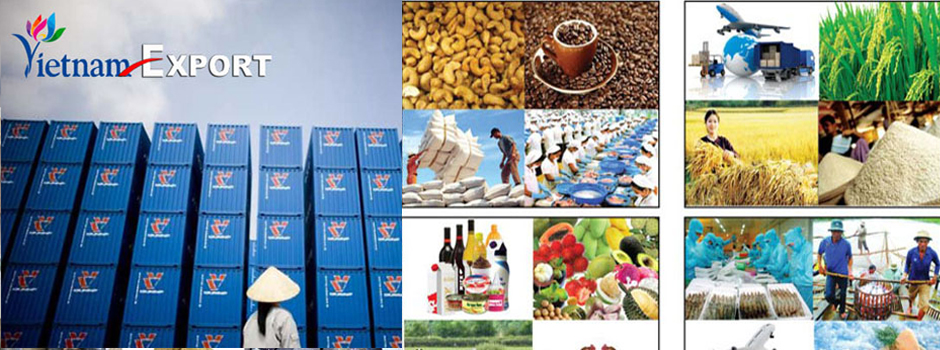
Vietnam's 2025 export revenue expected at $470 bln
Vietnam is expected to achieve a record total export value of more than $470 billion in 2025, up 16% year-on-year, heard a seminar in Hanoi on December 16.
In the first 11 months of the year, the country's total export revenue reached $430.2 billion.
According to Mr. Nguyen Anh Son, Director General of the Import–Export Department under the Ministry of Industry and Trade, the 2020–2025 period has marked a strong breakthrough in Vietnam’s trade performance, with average annual export growth of around 10%.
Since 2023, Vietnam has been among the world’s 20 largest economies in terms of foreign trade. Notably, the country has maintained a continuous trade surplus over the past decade, contributing significantly to stable foreign currency inflows, easing pressure on the exchange rate, and strengthening foreign exchange reserves.
In 2025, Vietnam recorded its 10th consecutive year of trade surplus, reinforcing its position as one of the most open economies in the region. Total trade has expanded dramatically over the past three decades, rising from just $13.4 billion in 1995 to $786.29 billion in 2024.
Vietnam’s trade surplus for this year is estimated at approximately $22 billion.
VnEconomy-Vũ Khuê
Japanese bank raises Vietnam's growth forecast
Mitsubishi UFJ Financial Group (MUFG), one of Japan’s three core financial and banking institutions and among the world’s largest financial groups, has raised its forecast for Vietnam’s gross domestic product (GDP) growth to 7.7% in 2025 and 8.2% in 2026, up from 6.9% and 7.4% projected in August, the Vietnam News Agency has reported.
MUFG said the upward revision reflects stronger-than-expected export performance and resilient domestic growth drivers, while also warning of emerging risks related to rapid credit expansion and exchange-rate pressures.
In its report “Vietnam: Modest risk of overheating amidst very positive structural reforms”, MUFG noted that Vietnam’s exports in 2025 surged by nearly 17% year on year, well above initial expectations. Growth was broad-based, with electronics exports rising about 28% and machinery and equipment up 14%, highlighting Vietnam’s expanding role in regional and global supply chains. The bank attributed part of this momentum to exemptions for certain products, particularly electronics, from US reciprocal tariff measures.
However, MUFG pointed to growing divergence across sectors. Garment and textile exports slowed to around 7% growth in 2025 as of November, compared with 10% in 2024. November alone saw a marginal 0.1% year-on-year increase, reflecting pressure on labour-intensive industries amid weaker global demand and fiercer competition.
Foreign direct investment (FDI) remained robust, with realised FDI rising about 10% in 2025 and newly registered capital staying high, signalling continued foreign investor confidence in Vietnam’s medium-term outlook.
MUFG’s baseline scenario assumes Vietnam and the US will sign a formal trade agreement, improving certainty for investment and business activity, though the bank cautioned that negotiations could still face obstacles.
Beyond trade and investment, MUFG stressed that domestic demand and structural reforms remain key pillars of growth. Increased public infrastructure spending and efforts to restore private-sector confidence are expected to support internal demand. The bank described Vietnam’s current reforms as the most ambitious since 1986, gradually addressing long-standing structural bottlenecks.
At the same time, credit growth exceeding 19% year on year in 2025 could heighten overheating risks, especially as Vietnam targets GDP growth of 8.3–8.5% in 2025 and around 10% in 2026.
Vietnam News Agency-Khanh Van
Internet Day 2025 opens in Hanoi
The Internet Day 2025 opened in Hanoi on December 17 with the theme “Internet Must Be Safer”.
With nearly 80 million users, the Internet has become an indispensable part of people's daily lives in Vietnam, with an average usage time of about 7 hours per day, according to Mr. Vu Hoang Lien, Chairman of the Vietnam Internet Association.
However, he noted that the most pressing challenge today no longer lies in connection speed or coverage, but in building a trustworthy digital space.
Addressing the event, Deputy Minister of Science and Technology Pham Duc Long said as Vietnam moves into a new stage of development, the central challenge is no longer to increase the coverage or speed of the Internet, but to proactively shape its development to fully leverage the obtained achievements in support of fast, sustainable, and inclusive growth.
As of October this year, Vietnam’s fixed and mobile broadband Internet speeds ranked 10th and 15th globally, respectively.
After nearly a year of commercial rollout, the 5G network now covers 59% of the population, laying a critical foundation for the digital economy, digital government and digital society.
VnEconomy-Hạ Chi
Korean firm plans to expand rare earth metal business in Vietnam
LS Eco Energy, a company specialising in renewable energy and rare earth elements under the Republic of Korea (RoK)'s LS Cable System, announced on December 17 that it has approved a plan to expand its rare earth metal business in Vietnam, in a bid to seek long-term growth in the strategic materials sector, according to a report from the Vietnam News Agency.
The new investment is estimated at approximately 28.5 billion KRW ($19.2 million).
The company aims to create an integrated value chain, including raw materials, rare earth oxides, and refined metals.
According to the plan, rare earth oxides supplied by global mining companies will be processed into metals at LS Eco Energy’s facilities in Vietnam, with downstream applications such as permanent magnets being produced through LS Cable System's overseas operations.
LS Eco Energy intends to establish a rare earth metal refinery at LS Cable System's branch in Ho Chi Minh City (LSCV), where it will refine rare earth oxides sourced from mining companies to produce rare earth metals. The company is currently in negotiations with several global mining firms to supply rare earths and establish a joint venture (JV). The final investment amount may be adjusted based on the JV's equity ratio and the progress of the business.
Rare earth metals are crucial for manufacturing permanent magnets used in the motors of robots, wind turbines, and electric vehicles.
Vietnam News Agency-Khanh Van
Project launched to promote low-carbon circular economy via clean tech innovation
The project "Promoting low-carbon circular economy through clean technology innovation towards sustainable development in Vietnam" was officially launched on December 17 with support from the Global Environment Facility (GEF) through the United Nations Industrial Development Organization (UNIDO).
The project focuses on three specific objective groups: strengthening the policy framework and connectivity within the national clean technology innovation ecosystem; supporting startups and SMEs by promoting the commercialization of clean technology innovations; and enhancing management, knowledge sharing, and experience within the clean technology innovation ecosystem.
Implemented by the Ministry of Agriculture and Environment through the Institute of Strategy and Policy on Agriculture and Environment, it will run for 48 months (2025–2028) nationwide, with key activities expected to take place in Hanoi, Ho Chi Minh City, and Da Nang.
Speaking at the event, Dr. Nguyen Dinh Tho, Deputy Director of the Institute, stated that in recent years, the State has issued many important guidelines and policies to promote innovation, energy transition, and circular economy development.
However, Dr. Tho said, a significant gap remains between strategic direction and the practical implementation and application of clean technology solutions. Many businesses, particularly startups and small and medium-sized enterprises (SMEs), still face difficulties in accessing technology, resources, experts, and suitable support models.
Ms. Hoang Hong Hanh, from the Institute, also pointed out that finance is currently one of the major barriers.
"Transitioning to a circular economy and investing in clean technology development requires large capital, while SMEs, especially micro-enterprises, struggle to access funds," said Ms. Hanh.
According to a 2022 World Bank report, building resilience and reducing greenhouse gas emissions for Vietnam through 2040 requires massive capital investment, estimated at approximately $368 billion. Meanwhile, 2025 statistics show that green credit remains limited, accounting for only 4.3% of total outstanding credit—a small scale compared to business needs.
Another barrier identified is limited capacity and knowledge. Specifically, businesses lack experience and skills in project development, business modeling, and building partnerships within the clean tech supply chain. Additionally, technical capacity limitations reduce the efficiency of clean technology development and application.
Against this backdrop, the project is expected to help narrow this gap.
"The project focuses not only on supporting businesses to develop and commercialize clean technology solutions but also aims to perfect the policy framework, strengthen ecosystem connectivity, and promote knowledge and experience sharing among management agencies, experts, research institutes, and the business community," said Dr. Tho.
According to Ms. Le Thi Thanh Thao, Representative of the UNIDO Country Office in Vietnam, this project is part of UNIDO's global program on clean technology innovation. It aims to support startups and SMEs with innovative solutions to mitigate climate change impacts by providing business acceleration services, investment promotion, and capacity building for the national innovation startup ecosystem.
"The project's priority sectors include energy, waste, materials, and agriculture. The project also prioritizes support for women, youth, and marginalized groups," she said.
She emphasized that the project's overall objective is to promote the development of clean technology innovation solutions serving the low-carbon and circular economy, oriented toward sustainable and inclusive development, while integrating renewable energy, energy efficiency, and waste management.
Vneconomy-Tùng Dương
Vietnam officially pilots AI education across all grade levels
The Ministry of Education and Training (MOET) has issued Decision No. 3439/QĐ-BGDĐ, officially promulgating the Pilot Content Framework for introducing AI into the general education curriculum.
The new content framework is built upon the 2018 General Education Program, referencing UNESCO's AI Competency Framework for students. It aims to help students "know how to use AI" while "knowing how to control AI," using technology for the common good, safety, and humane values.
According to the MOET, the AI education framework for students is developed based on four main knowledge strands, corresponding to four competency domains that are intertwined and complementary: human-centered mindset, AI ethics, AI techniques and applications, and AI system design.
The content framework is designed corresponding to two educational phases: the Basic Education Phase (including primary and secondary levels) and the Career-Oriented Education Phase (upper secondary levels).
In addition to core educational content, students can select elective study topics to enhance practical skills and delve deeper into AI application fields or programming techniques and AI system development.
The AI education framework also sets out criteria for assessment. Accordingly, assessment must be carried out regularly and periodically, requiring close adherence to students' AI competencies. The framework prioritizes the ability to apply knowledge and skills to create useful applied products, while simultaneously evaluating logical thinking, creativity, and the ability to identify and handle risks when working with AI.
Vneconomy-Bảo Châu
Hanoi Department of Home Affairs to manage foreign workers from 2026
The Hanoi People's Committee has issued Decision No. 81/2025/QĐ-UBND dated December 15, 2025, regarding the delegation of authority to the Department of Home Affairs to handle administrative procedures and state management tasks related to foreign workers employed in Hanoi.
According to the decision, the Hanoi People's Committee delegates the Department of Home Affairs to handle administrative procedures and State management duties concerning foreign workers in accordance with Government Decree No. 219/2025/NĐ-CP regulating foreign workers in Vietnam.
Specifically, the department will exercise authority as prescribed in Article 4 of Government's Decree No. 219/2025/NĐ-CP regarding foreign workers working for employers with headquarters, branches, representative offices, or business locations situated outside of industrial zones and high-tech parks.
These duties include: Processing administrative procedures for granting, re-issuing, and extending confirmations for work permit exemptions; Granting, re-issuing, and extending work permits for foreign workers in Vietnam; and Revoking work permits and confirmations of work permit exemptions.
In cases where an employer has headquarters located in Hanoi and outside of industrial zones and high-tech parks, or where an employer does not have headquarters but has a branch, representative office, or business location in Hanoi and outside of industrial zones and high-tech parks, the authority to handle procedures for granting, re-issuing, extending, and revoking work permits and work permit exemptions belongs to the Department of Home Affairs.
Under this delegation, the department will also receive notifications from employers as prescribed in Clauses 4 and 5 of Article 9, and Clause 5 of Article 22 of Decree No. 219/2025/NĐ-CP regarding foreign workers working for entities located outside of industrial zones and high-tech parks.
The department is responsible for compiling and submitting periodic written reports before December 15 annually (or on an ad-hoc basis) to the Ministry of Home Affairs regarding the status of foreign workers in Hanoi.
This Decision is effective from January 1, 2026.
Vneconomy-Nhật Dương
Vietnam Economic Times December 15, 2025
Dear readers,
The year 2025 will wrap up in just over 2 weeks, marking the end of Vietnam’s five-year socio-economic development plan (2021-2025), with the major achievements secured providing a solid foundation for the country to enter a new era of development under the direction set by the upcoming 14th National Congress of the Communist Party of Vietnam.
In this final year of the five-year development journey, Vietnam continued to be buffeted by headwinds from external factors and domestic difficulties, particularly natural disasters like storms, floods, and landslides that in many localities were at historic levels, causing severe damage to life and property.
In this context, the Party, State, and people of Vietnam, including its business community, with strong determination to overcome all difficulties, have surmounted the obstacles and spared no effort to fundamentally achieve the socio-economic goals for 2025 and the entire five-year 2021-2025 period, outlined by the 13th National Party Congress.
The most evident achievement is macro-economic stability, controlled inflation, and major economic balances being ensured.
Total import-export turnover for the year is forecast to reach a record $900 billion, with turnover in the first eleven months of 2025 standing at nearly $840 billion and a trade surplus posted of some $20.5 billion. Registered FDI in the eleven-month period reached nearly $33.7 billion, an increase of 7.4 per cent compared to the same period of 2025. The socio-economic achievements of the first eleven months have created a basis to believe that national GDP growth this year could reach 8 per cent or higher.
The Politburo issued Conclusion No. 203-KL/TW on November 4, on continuing to implement tasks and solutions to achieve the highest possible fulfillment of 2025 growth targets and to create a solid foundation for sustainable double-digit growth in the time ahead.
Later, on November 13, the National Assembly approved Resolution No. 244/2025/QH15 on the Socio-Economic Development Plan for 2026, setting the economic growth target for 2026 at 10 per cent or more, with GDP per capita reaching $5,400-5,500.
Politburo Conclusion No. 203 and National Assembly Resolution No. 244 represent strong political determination and reflect Vietnam’s high expectations for a new phase of development, starting from the 14th National Party Congress, which is scheduled to take place from January 19-25, 2026.
To further clarify the orientation for Vietnam’s socio-economic development in the new era, the Vietnam’s Economy in 2025 and Prospects in 2026 Forum (VEPF 2025), with the theme “Vietnam’s rapid and sustainable economic development and green transition in the digital age”, will be co-organized on December 16 by Tap chi Kinh te Viet Nam / Vietnam Economic Times / VnEconomy and relevant agencies, under the direction of the government and the Central Commission for Policy and Strategy.
To amplify the theme of the VEPF 2025, our Cover Story in this edition looks back on the socio-economic development situation this year, with analyses, assessments, and evaluations of the causes of problems and shortcomings, affirming the achievements not only in 2025 but also in the entire 2021-2025 period, considering this to be a solid foundation to propel the country into the new development phase (2026-2030), under the direction of the resolutions the 14th National Party Congress will outline.
Warmest regards.
Dr. CHU VAN LAM
CHAIRMAN OF THE EDITORIAL BOARD
VET-Vietnam Economic Times - VnEconomy
$144 mln to be invested in civil aviation component of Phan Thiet airport
Authorities of Lam Dong Province in south central Vietnam have approved an investment policy for the civil aviation component of Phan Thiet Airport project, with estimated investment capital of nearly VND3.8 trillion ($144 million).
The civil aviation component will cover about 74.6 hectares. The passenger terminal is designed to span roughly 16,000–18,000 square meters.
The airport project is planned to operate as a 4E-class civil airport, with a capacity of around two million passengers per year by 2030. It will serve both domestic and international routes.
The provincial government will seek a private investor through a competitive bidding process to build and operate the civil terminal and related infrastructure. The investor must contribute at least 15% of the total capital, with the remainder raised from lawful financing sources.
The project will operate for 50 years from the date the investor is formally approved under relevant regulations.
Phan Thiet Airport project covers a total area of 543 hectares in Mui Ne Ward. Construction began in January 2015 and includes both military and civil components.
VnEconomy-Thiên Ân
Vietnam welcomes 20 millionth foreign visitor in single year for first time
Vietnam welcomed the 20 millionth foreign tourist on December 15, marking a historic milestone in the 65-year development of the country’s tourism sector, the Government News has reported.
The welcome ceremony took place at the Phu Quoc International Airport in the Mekong Delta province of An Giang.
Since Vietnam fully reopened its tourism sector on March 15, 2022, after the Covid-19 pendamic, the industry has rebounded strongly, with international arrivals reaching 12.6 million in 2023 and 17.6 million in 2024.
During January-November this year, Vietnam welcomed 19.15 million foreign arrivals.
The total number of foreign tourists in 2025 is expected to exceed 21 million, surpassing the pre-pandemic level of 18 million recorded in 2019.
Government News-Khanh Van
HCMC, Kazakhstan bolster air connectivity and commercial partnership
Ho Chi Minh City is pushing to promote cooperation with Kazakhstan in the fields of aviation, tourism, finance, logistics, and business connectivity. Notably, the establishment of the Consulate General of Kazakhstan in the city is expected to become a key highlight in bilateral relations in 2026.
These points were emphasized during a meeting between H.E. Mr. Kanat Tumysh, Ambassador of Kazakhstan to Vietnam, and Mr. Nguyen Van Duoc, Chairman of the City People's Committee, during the former's working visit to the city on December 15.
The Chairman of the People's Committee of Ho Chi Minh City believes that the presence of the Consulate General of Kazakhstan in Ho Chi Minh City will positively contribute to promoting cooperation between the city and localities in Kazakhstan, thereby enriching and deepening the strategic partnership between Vietnam and Kazakhstan.
Immediately following the visit to Kazakhstan by Vietnamese Party General Secretary To Lam in May 2025, Ho Chi Minh City and its Kazakh partners have actively promoted cooperation in various fields, with a focus on building the International Financial Center in the city, the Chairman said.
In July of this year, the city had the honor of welcoming the Governor of the Astana International Financial Center (AIFC) for a working visit to Ho Chi Minh City, where both sides organized many practical activities, including a seminar on "Cooperation in Developing the International Financial Center in Ho Chi Minh City,” according to the leader of Ho Chi Minh city
Based on that, the city is particularly interested in Kazakhstan's experience in building and operating the AIFC, Mr. Duoc said, adding that this model has many relevant points for Ho Chi Minh City to refer to in establishing the International Financial Center in the city.
He hoped that the Kazakh Ambassador will continue to act as a bridge to promote direct cooperation between Ho Chi Minh City and the AIFC; and believed that, on the foundation of a solid strategic partnership, along with the support of high-level leaders and the proactive engagement of localities in both countries, the relationship between Ho Chi Minh City and Kazakhstan will develop more broadly and comprehensively in the coming time.
The establishment of the Consulate General of Kazakhstan in Ho Chi Minh City is expected to become a highlight in bilateral relations in 2026, he said.
Ambassador Kanat Tumysh, for his part, noted that with its diverse tourism ecosystem—ranging from urban, cultural-historical, culinary, and shopping experiences to MICE (Meetings, Incentives, Conferences, and Exhibitions) and river and marine tourism, the city possesses great potential to attract an increasing number of tourists from Kazakhstan and Central Asia for both leisure and business connections.
Regarding aviation cooperation, there are currently more than 40 direct flights per week between Kazakhstan and Vietnam (specifically Da Nang and Phu Quoc). However, there is no direct route connecting HCM City to Kazakhstan, which significantly limits exchange and cooperation between the two sides.
In the context of deepening bilateral relations, particularly since May 2024, when Kazakhstan and Vietnam implemented a visa exemption policy for citizens of both countries holding ordinary passports, the Ambassador suggested the urgent need for a direct flight connecting HCM City with Kazakhstan’s major economic hubs, such as Astana or Almaty. This would greatly facilitate trade, investment, and tourism cooperation.
Furthermore, Kazakhstan possesses the largest railway network in Central Asia, playing the role of a key transit hub for the Asia-Europe Transport Corridor and the intermodal rail route connecting China and Europe.
The ambassador expressed his willingness to share these practical experiences with HCM City regarding the planning and operational organization of long-distance railway lines that link industrial parks, seaports, and domestic logistics systems.
Regarding the development of the International Financial Center in HCM City, Kazakhstan committed to supporting the city in accessing and referencing experiences related to specific legal frameworks, mechanisms for attracting international financial institutions, international arbitration models, and international dispute resolution mechanisms, the ambassador said.
Vneconomy-Thanh Thủy
HanoiTex HanoiFabric 2025 opens
The Hanoi Textile Garment Industry and Fabric Garment Accessories Expos 2025 (HanoiTex HanoiFabric 2025) kicked off in Hanoi on December 16, featuring more than 250 booths from nine countries and territories, according to a report from the Vietnam New Agency.
The three-day event focuses on textile and garment machinery and on fabrics and accessories for the textile, garment and embroidery sectors.
Technologies on display include water- and chemical-saving dyeing machines, high-speed digital printers for small orders, energy-efficient finishing lines saving 25–35% of power, and waste-heat reuse solutions.
The event is expected to attract over 10,000 professional visitors, including manufacturers, import-export enterprises, designers, market experts and equipment distributors, reinforcing its role as a specialised trade and networking platform for the industry. Beyond product showcases, the exhibition introduces integrated solutions to help enterprises orient investment strategies, enhance added value and improve competitiveness amid rising market standards. The event enables visitors to update key trends such as green production, digital transformation and automation, and enterprises to expand partner networks and supply sources.
VNA-Khanh Van
Local leaders must be held accountable for IUU fishing violations: PM
Prime Minister Pham Minh Chinh on December 16 chaired the 26th meeting of the National Steering Committee for Combating Illegal, Unreported and Unregulated (IUU) Fishing, underscoring that Secretaries of Party Committees and Chairpersons of People’s Committees at all levels must bear direct responsibility if IUU fishing violations occur in their localities, according to a report from the Vietnam News Agency.
The meeting, held at the Government headquarters and connected online with 21 coastal provinces and centrally-run cities, was attended by Deputy Prime Minister Tran Hong Ha, leaders of ministries, central agencies, and coastal localities.
It was a regular weekly session of the steering committee aimed at reviewing progress and defining next steps to eradicate IUU fishing and promote sustainable fisheries development.
After hearing reports from ministries and local authorities, PM Chinh praised the active engagement and initial results achieved in recent times. However, he stressed that combating IUU fishing is a political task that requires the entire political system to act decisively, for the country’s reputation and international credibility, for the sustainable development of the fisheries sector, and for the long-term livelihoods of fishermen.
He called for continued review and improvement of the legal framework to ensure strong, deterrent sanctions capable of decisively ending IUU violations. He pointed out that weaknesses in grasping the situation and managing fishing vessels and fishing communities remain in some areas, and clarified that this is the responsibility of grassroots authorities.
PM Chinh requested the Government Inspectorate to promptly identify localities that lack determination or fail to handle violations thoroughly, including cases where vessels not meeting legal requirements are still allowed to leave ports, and to clarify responsibilities and impose sanctions without delay.
Emphasizing the need for immediate results, the PM demanded strict handling of deliberate violations within the coming week. He also urged the Vietnam Fatherland Front, socio-political organizations, the media, and the public to join efforts in condemning IUU fishing.
Local authorities were also asked to work with the Vietnam Association of Seafood Exporters and Producers (VASEP) to address enterprises involved in importing illegally-sourced aquatic products.
On livelihoods and occupational transition for fishermen, PM Chinh noted that only seven out of the 21 coastal localities have issued relevant policies, hence he ordered the remainders to complete such policies within five days.
According to the Ministry of Agriculture and Environment, ministries and sectors have finalized a draft directive of the PM on the resolute implementation of tasks and solutions to combat IUU fishing and promote the sustainable development of Vietnam’s fisheries sector. Inter-sectoral inspection teams have been deployed to check IUU fishing prevention efforts in many provinces and cities.
Relevant ministries and agencies have coordinated to establish a working group to finalize reports and prepare plans for online technical discussions with the European Commission (EC), as well as the necessary content and conditions for both online and in-person meetings with the EC. They have provided localities and related agencies with full information on the shipments suspected of IUU-related violations, and completed the standardization of the national fisheries database for presentation to the EC inspection mission.
At present, 100% of fishing vessels nationwide – 79,231 boats – have been registered and updated on the VnFishbase system. Those deemed unfit for operation are under strict control, with management responsibilities assigned to commune-level authorities and relevant forces overseeing mooring locations.
Over the past week, authorities examined 3,165 vessel departures and 3,056 arrivals at ports in accordance with regulations, and monitored 8,765 tons of seafood landed through ports via the electronic catch documentation and traceability (eCDT) system.
Regarding seafood traceability, 319 port landing receipts were issued at 51 designated fishing ports eligible to certify raw materials from capture fisheries. In parallel, authorities inspected five import dossiers for 303,808 kg of seafood. Notably, vessels previously violating foreign waters have been handled strictly, the ministry noted.
VNA-Khanh Van
Japan remains one of Vietnam's leading economic partners
Japan remains one of Vietnam’s leading economic partners across trade, foreign direct investment (FDI), and official development assistance (ODA), heard a conference held in Ho Chi Minh City on December 15.
The event was organized to seek ways to boost Vietnam’s trade with Japan and the Republic of Korea.
Vietnam and Japan established diplomatic relations in 1973 which was upgraded to the comprehensive strategic partnership in 2023.
In the first 11 months of 2025, Vietnam’s export revenue to Japan reached $24.4 billion, up 8.6% year-on-year, and accounting for 5.7% of Vietnam’s total export turnover. Meanwhile, imports from Japan amounted to $22.4 billion, surging 14.1% year-on-year, accounting for 5.5% of Vietnam’s total import revenue.
Trade structures between the two countries are largely complementary. Vietnam mainly exports textiles and garments, transport vehicles and parts, machinery, wood products, aquatic products, and computers and components to Japan, while importing computers, electronic components, machinery, equipment, and steel products from the latter.
In terms of investment, Japan was Vietnam’s third-largest investor as of the end of November 2025, with 5,698 projects and total registered capital of $79.27 billion, accounting for about 15% of the total FDI in Vietnam.
VnEconomy-Nguyệt Hà
Guidance required for AI application in education
At a secondary school in Hanoi’s Hoang Mai ward, a history teacher cautiously navigates the AI wave sweeping through her and other classrooms. She knows the technology’s potential, but she’s not entirely convinced it’s ready for her students. “I use AI now and then,” she told Vietnam Economic Times / VnEconomy. “Mostly to make lessons more engaging, or to design little interactive games. But the tools still have too many flaws, the content isn’t always accurate, and it doesn’t quite fit our actual curriculum. So it’s hard to rely on AI for serious teaching.”
Her students, however, are enthusiastically embracing the technology, sometimes a little too much. “Many use AI to answer questions or prepare class presentations, but they blindly trust the results,” she noted. “That often leads to shallow or even misleading understanding. At their age, they simply don’t have the skills as yet to evaluate and filter information, so dependence on AI comes easily.”
AI is no longer just another digital tool. In education, it’s being hailed as a catalyst for transformation, promising to reshape both teaching quality and school management. As one of the eleven strategic technologies identified under Decision No. 1131/QD-TTg, dated June 12, AI is currently being actively researched for integration into teaching and learning throughout Vietnam’s education system.
AI enters the classroom
The Politburo issued Resolution No. 71-NQ/TW on August 22, setting a national goal of universalizing digital and AI technologies in the management and organization of education at all levels. The resolution emphasized promoting the use of AI to innovate teaching, learning, assessment, and evaluation methods, while also fostering the development of digital education models, AI education, and governance over smart education.
The Vietnam Education Publishing House has completed a full set of AI education textbooks for students from Grade to 12, designed around a knowledge framework suited to Vietnamese students’ learning capacity, incorporating local psychology and cultural elements to make the content approachable. Alongside theoretical lessons, the books include a diverse range of practical exercises tailored to different regional learning conditions.
Professor Chu Duc Trinh, Rector of the University of Engineering and Technology at the Vietnam National University (VNU-UET), told Vietnam Economic Times / VnEconomy that the application of AI in industry today can be imagined as an equation: “x + AI”. When combined with any field, AI has the potential to enhance operational efficiency and workplace productivity.
According to the Professor, integrating AI into teaching is an inexorable and necessary trend. “AI doesn’t just help students absorb textbook knowledge faster; it also broadens their understanding across many areas of society,” he said. However, he cautioned that students, especially in primary and secondary school, need proper guidance, as AI-generated output can be accurate and useful but also illusory or based on unverified sources at times. “The introduction of AI into education must be carried out carefully and systematically, at a pace that’s neither too slow to miss opportunities nor too fast to invite risks,” he stressed.
AI today is already capable of resolving most problems at the general education level, which explains why many students are quick to turn to it for help. Yet Professor Trinh warned that overreliance on AI could cause students to lose sight of the true purpose of education. “Schools must help students realize that the real value of learning lies in the process of thinking, discovery, and practice, not just in producing correct answers.”
Therefore, AI should be introduced selectively rather than indiscriminately across all subjects. Students still need time to develop critical thinking, accumulate knowledge, and learn how to use these tools properly. “Take writing, for example,” he said. “AI can help correct sentences, fix grammar, suggest writing styles, or add background information, but it cannot replace emotion, creativity, or the writer’s personal voice. Writing is an expression of the soul, something no machine can fully replicate.”
Smarter education
One area where AI can already make an immediate impact is in school management, according to Professor Trinh, from the primary to university level. It can help optimize tasks such as scheduling, student management, teaching quality assessment, and administrative operations. “With Vietnam’s growing computing infrastructure and existing technological capabilities, schools can start adopting the ‘smart school management’ model right now,” he believes.
However, introducing new technology, especially AI, will be accompanied by major changes. Some traditional processes could be phased out, while new management challenges will emerge. “Schools must therefore be mentally and structurally prepared to embrace innovation and move towards a leaner, more modern governance model,” he added.
The initiative to bring AI into education is not solely the responsibility of the Ministry of Education and Training. At a press conference in September, Mr. Ho Duc Thang, Director of the National Institute of Digital Technology and Digital Transformation at the Ministry of Science and Technology, said the draft Law on AI identifies the popularization of the technology as a nationwide goal, integrating it comprehensively into the education system.
Importantly, for primary education, AI adoption will come with strict safeguards. Mr. Thang emphasized that a dedicated list of AI tools will be carefully reviewed for safety and ethics before being introduced into classrooms.
With growing investment in infrastructure, continuous improvements in digital readiness, and AI curricula under rapid development, many experts believe that in just a few years AI will become adopted widely across Vietnam’s entire education system. Yet even then, they emphasize, caution must remain at the core, so that innovation truly leads to lasting progress in education.
VET-Ngo Huyen